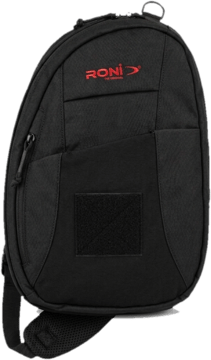

Micro Roni Replacement Parts & Repair Guide: Maintenance for Pistol Conversion Kits


Maintaining your Micro Roni chassis system is crucial for safe operation, performance, and legal compliance. Whether you own a Gen 3, Gen 4, or Glock-specific kit, understanding replacement parts, repair procedures, and sourcing reliable components ensures your firearm remains functional and within regulatory guidelines. This guide covers everything from common replacement parts, compatibility, and repair techniques to pricing, legal considerations, and use-case scenarios.
Why Replacement Parts and Repair Matter
Micro Roni chassis systems are precision-engineered to enhance the performance and ergonomics of your pistol platform. Over time, wear and tear, frequent use, or accidental damage can necessitate replacement parts or repairs. Relying on genuine components preserves reliability, maintains point-of-impact consistency, and ensures compliance with legal standards.
Replacement parts are more than just functional spares, they preserve the performance and durability of your Micro Roni chassis. Given the mechanical forces and repeated stresses involved in use, components like rails, fasteners, stabilizers, and grips can wear, loosen, or fail. Using genuine parts from Micro Roni categories ensures:
- Correct tolerances and engineering fit
- Material quality and long‑term reliability
- Full compatibility with your specific chassis model
- Continued alignment with regulatory guidance
Expected Wear Intervals by Component
Wear rates vary based on usage frequency, environment, and configuration. The table below provides general service expectations for commonly replaced components.
| Component | Typical Wear Interval | Notes |
|---|---|---|
| Fasteners & Pins | 3,000–5,000 cycles | Inspect for loosening or deformation |
| Rails & Mounts | 5,000+ cycles | Replace if showing flex or shift |
| Stabilizer Hinges | 2,000–4,000 adjustments | Check locking tension regularly |
| Thumb Rests & Grips | As needed | Replace if cracked or worn smooth |
| Flashlight Adapters | As needed | Inspect for heat or stress damage |
These intervals are guidelines; heavy or professional use may require more frequent inspection.
Common Micro Roni Replacement Parts and Pricing
Replacement parts vary depending on generation and model, but the following components are frequently serviced:
| Part Category | Description | Compatibility Notes | Typical Price Range (USD) |
|---|---|---|---|
| Forearm Grips | Vertical or angled forward grips that improve control and handling | Fits standard Picatinny rails on Micro Roni chassis | $24 – $185 |
| Picatinny Rails | Modular rail segments for mounting accessories like lights, grips, and optics | Rails must match chassis rail width and length specs | $15 – $195 |
| Pistol Grips | Ergonomic hand grips to improve shooter control | Confirm screw pattern fit with chassis | $10 – $50 |
| Bipods | Support legs for stabilized shooting; often rail-mounted | Requires compatible lower rail on chassis | $40 – $155 |
| Magazines | High-capacity or standard magazines for pistol platform | Must match pistol model in chassis | $20 – $80 |
| Stocks | Adjustable, folding, or fixed stocks for rear support | Check local laws if configured for shoulder use | $70 – $100+ |
| Flashlight Adapters | Mounts for tactical lights or lasers | Designed for Picatinny rail attachment | $20 – $99 |
| Handguards | Front accessory panels with integrated rails for mounting grips, lights, or bipods | Ensure rail length matches chassis | $80 – $560 |
Using OEM replacement parts ensures correct tolerances, consistent indexing of your pistol in the chassis, and maintains compliance with federal and state laws.
Full product lineup can be found from this section Micro Roni Product Category Weapon Accessories.
Compatibility Considerations
When selecting replacement parts, consider the following compatibility factors:- Generation-Specific Fit: Gen 3 and Gen 4 chassis have different rail layouts, screw hole spacing, and accessory slots. Refer to Micro Roni Naming, History, & Generational Terms for detailed generational differences.
- Pistol Platform: Glock 17 and 19 kits are dimensionally different; using the wrong part may cause misalignment, function issues, or void warranties. Consult the Glock 19 Guide and Glock 17 Guide.
- Accessory Compatibility: Some stabilizers, rails, and grips require specific chassis generation,
- Legal Restrictions: Certain stocks and stabilizers may change the firearm classification.
Repair & Maintenance Procedures
Regular maintenance and careful repair extend the life of your Micro Roni system. Recommended procedures include: 1. Disassembly and Cleaning- Remove the pistol from the chassis before any cleaning.
- Use a soft brush to remove dust and debris from rails, pins, and stabilizers.
- Inspect fasteners, screws, and rails for wear.
- Lubricate moving parts lightly with firearm-safe oil to prevent corrosion.
- Over time, screws, hinge pins, and rail locks can loosen.
- Replace fasteners with OEM parts only.
- Cross-reference part numbers in the Accessories Guide.
- Check that Picatinny rails and optic mounts remain flush and secure.
- Any lateral play can change your point-of-impact.
- For Gen 4 systems, review the Gen 4 Overview for proper torque specifications and rail placement.
- Folding or adjustable stocks must maintain proper hinge alignment.
- Ensure pins and locks are secure after each adjustment.
- Stabilizer maintenance tips are available in Stabilizer & Roni Micro Stabilizer Options.
- Thumb rests and pistol grips should be replaced if worn or cracked.
- Verify screw patterns and spacing against the Accessories Guide for your chassis generation.
- Schedule visual inspections monthly for frequent users.
- Confirm the pistol remains properly indexed in the chassis.
- Check that all accessory attachments are secure and function correctly.
- You can check reliable replacement parts Micro Roni Product Category
- Avoid third-party marketplaces unless they specifically link to Micro Roni OEM references.
What Not to Repair or Modify
While many Micro Roni components can be safely replaced or serviced, certain parts are critical to chassis integrity and should never be repaired or altered. Attempting to modify these components can compromise safety, performance, and legal compliance.
Do not attempt to repair or modify the following:
-
Primary chassis shell – Any cracks or structural damage require full replacement; drilling, sanding, or reshaping is unsafe.
-
Hinge housings and locking mechanisms – Altering these may prevent folding stocks or stabilizers from locking correctly.
-
Reinforced rail interfaces – Modifying or bending rails can misalign optics and affect point-of-impact.
-
Integrated recoil buffers or tensioning components – Adjusting or removing these can damage internal mechanics or reduce recoil control.
Why this matters:
-
Safety: Structural integrity can be compromised, increasing risk of injury.
-
Performance: Misalignment can shift point-of-impact or reduce handling stability.
-
Compliance: Unauthorized modifications may violate ATF definitions or state laws.
Recommendation: If a non-serviceable component is damaged, replace it only with a genuine OEM part or consult official guidance. Never attempt DIY structural repairs.
Legal Compliance Considerations
When replacing parts or performing repairs:- Stocks & Stabilizers: May trigger short-barreled rifle (SBR) classification under federal law if assembled incorrectly.
- Federal Regulations: Ensure that modifications do not violate ATF definitions.
- Maintain documentation of all parts purchased and installed.
Use-Case Scenarios for Replacement & Repair
- Range Training: Frequent cycling of parts necessitates replacement pins, thumb rests, or rails for reliability.
- Home Defense: Maintaining stabilizers and ergonomic grips ensures rapid follow-up shots.
- Competition Shooting: Reinforced rails and properly maintained optic mounts maintain zero during high-speed use.
- Professional / Duty Use: Documentation of replacement parts, OEM sourcing, and compliance support operational readiness.
FAQ
Q: Where can I buy OEM Micro Roni replacement parts?
A: Purchase replacement parts from official Micro Roni channels or authorized retailers. Avoid third-party marketplaces unless they clearly verify OEM authenticity.
Q: Can I replace a Gen 3 part with a Gen 4 component?
A: Not all parts are cross-compatible. Always check the specific generation and model before attempting replacement to ensure proper fit and function.
Q: What legal issues should I consider when replacing stabilizers or stocks?
A: Some parts may change your firearm’s classification under federal or state law. Confirm that your configuration remains compliant with applicable regulations before installation.
Q: How do I maintain point-of-impact consistency after replacing rails or stabilizers?
A: Make sure screws are torqued correctly, rails are properly aligned, and all optics or attachments are securely mounted. Proper installation preserves accuracy and stability.
Q: Can I upgrade accessories during repair?
A: Yes, as long as the accessories are compatible with your specific chassis generation and do not violate any legal restrictions. Ensure all components are correctly installed to maintain safety and functionality.
Conclusion
Proper replacement and repair of Micro Roni components preserve performance, reliability, and compliance. By using OEM parts, consulting generation-specific guides, and following maintenance best practices, you can extend the life of your chassis system. Buyers and sellers benefit from linking to official Micro Roni resources, which also provide guidance for accessories, legal compliance, and model-specific considerations.
Further Reading / Other Resources
For more in-depth information and model-specific guidance:
- Micro Roni Complete Guide to Models, Use, and Legal Information
- Micro Roni Gen 4 Overview
- Micro Roni Gen 3 Specs, Compatibility, Legal Compliance & Use Cases
- Micro Roni for Glock 19: Compatibility & Setup Guide
- Micro Roni for Glock 17: Compatibility & Setup Guide
- Micro Roni Accessories: Lights, Stabilizers & Parts
- Micro Roni Naming, History & Generational Guide
- 10mm Micro Roni & Caliber Options
- Micro Roni with Drum & High‑Capacity Configurations
- Where to Buy Micro Roni Kits & 2026 Price Guide
- Best Micro Roni Models & Accessories for 2026
- Micro Roni Official Features & Compatibility
- Micro Roni Stabilizer & Low‑KD Variants: Use Cases & Compatibility
- Micro Roni Legal Guide: California‑Specific Rules (2026)
- Micro Roni Stabilizer Options for Enhanced Control