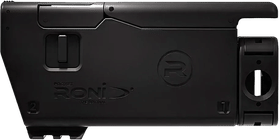

How Durable Are Pistol Conversion Kits? Polymer, Rails, Locks & Long-Term Wear Explained


A pistol conversion kit can look simple from the outside, but its durability depends on much more than whether the chassis is made from polymer or aluminum. The parts that matter most are the interfaces where the pistol, chassis, rails, fasteners, locks, hinges, and accessories interact repeatedly.
If you're evaluating a pistol conversion kit for long-term use, the better question isn't simply, "Is this chassis durable?" You want to know where wear is likely to occur, how much mechanical load each component handles, and whether the design prevents that load from becoming concentrated at one small point.
That distinction matters because a chassis can have a rigid body and still develop problems at a rail, fastener, locking surface, hinge, or other high-use interface.
What Determines Pistol Conversion Kit Durability?
Pistol conversion kit durability is primarily a system-level question. The chassis material is important, but it is only one part of the equation.
The main areas to evaluate are:
- Chassis material: Polymer and aluminum behave differently under impact, heat, repeated loading, and fastening.
- Load-bearing interfaces: These are the points where forces are transferred between the pistol and chassis.
- Locking system: Repeated installation and removal can place wear on latches, locking surfaces, pins, and related components.
- Rail construction: Accessory mounting points can experience concentrated loads and repeated movement.
- Fasteners: Screws, pins, and threaded interfaces can loosen or wear over time.
- Moving components: Hinges and folding mechanisms introduce additional wear points.
- Accessory configuration: Additional equipment can concentrate mechanical load around specific mounting areas.
- Maintenance: Dirt, debris, damaged hardware, and neglected wear points can accelerate deterioration.
A useful way to think about durability is to separate the chassis into structural components and wear components.
The structural components provide the overall chassis body and rigidity. Wear components are the interfaces that are repeatedly moved, tightened, locked, adjusted, or subjected to accessory loads.
A durable design needs both to work together.
Polymer vs. Aluminum: Which Is More Durable?
The polymer-versus-aluminum comparison is one of the easiest ways to oversimplify chassis durability.
Polymer isn't automatically fragile, and aluminum isn't automatically indestructible. What matters is how each material is used within the design.
Polymer pistol chassis
Polymer can provide several advantages for a conversion chassis:
- Lower overall weight
- Resistance to many forms of corrosion
- Ability to form complex integrated shapes
- Impact characteristics that differ from rigid metals
- Efficient integration of grips, housings, and other chassis features
The more important question is what happens at the high-load interfaces.
For example, a polymer body may be perfectly suitable for the main chassis structure while requiring additional reinforcement around threaded holes, rails, locking points, or other concentrated load areas.
This is why looking only at the material specification doesn't tell you enough.
Instead, ask:
Where is the polymer carrying the load, and where has the manufacturer reinforced the interface?
Aluminum components
Aluminum can provide increased rigidity and durable mounting surfaces in applications where stiffness and threaded interfaces are important.
But an aluminum component doesn't automatically make an entire conversion kit more durable. The surrounding components, fasteners, attachment points, and interface design still determine how forces are distributed.
The better comparison isn't: Polymer vs. aluminum
It's: How is the material being used at each load-bearing interface? That's the more useful question when you're evaluating a pistol chassis.
Why the Locking System Matters
The pistol-to-chassis interface is one of the most important areas to monitor because it determines how securely the two systems remain connected.
A locking system can include multiple components rather than one simple latch. Depending on the design, this can involve locking surfaces, pins, springs, tabs, or other retention components.
Repeated installation and removal means these areas can experience mechanical cycling even when the chassis body itself shows little visible wear.
When evaluating this area, look for:
- Positive and consistent engagement
- Excessive movement at the interface
- Damaged or deformed locking surfaces
- Unusual changes in how the chassis closes or locks
- Loose pins or hardware
- Components that no longer return to their intended position
A change in lockup is more important than cosmetic wear. A few scratches on the outside of a chassis may have little significance. Increasing movement at a critical interface deserves much closer attention.
Rails Are a Concentration Point
Rails are another area where durability needs to be evaluated by load path rather than appearance.
When an accessory is mounted, the mounting hardware transfers forces into the rail and then into the chassis. That means the rail isn't simply a convenient attachment point. It becomes part of the load path.
This is where concentration risk becomes useful. If a significant amount of mechanical load is concentrated around a small mounting area, that interface deserves more attention than an unloaded portion of the chassis.
When inspecting a rail, look for:
- Damaged or distorted mounting slots
- Loose mounting hardware
- Movement between the accessory and chassis
- Damage around the rail attachment area
- Changes in fit after repeated installation and removal
- Cracks or deformation around polymer mounting interfaces
You also shouldn't assume that adding more accessories automatically makes a chassis better equipped. Every additional accessory introduces another interface that needs to remain secure.
The goal is to understand where the load is going, not simply how many mounting points the chassis provides.
What Parts Wear First?
Long-term conversion kit wear is rarely about the entire chassis suddenly becoming unusable. More often, individual interfaces show signs of deterioration before the main body becomes a concern.
Component | Potential wear area | What to monitor |
Polymer chassis | Stress and impact areas | Cracks, deformation, unusual marks |
Rails | Mounting interfaces | Movement, damaged slots, deformation |
Fasteners | Threads and seating surfaces | Loosening or damaged hardware |
Locking components | Engagement surfaces | Changes in lockup or fit |
Pins | Repeated movement points | Excessive play or movement |
Hinges | Pivot and locking areas | Increasing looseness |
Accessory mounts | Load-bearing interfaces | Shifting or instability |
This is also why conversion kit lifespan shouldn't be reduced to a single round count.
Two identical chassis systems can experience very different levels of wear depending on how frequently they're installed, removed, adjusted, transported, maintained, and configured.
Instead of asking only, "How many rounds will it last?", evaluate the condition of the components that actually experience repeated mechanical stress.
How to Manage Concentration Risk
The most useful durability habit is to identify where mechanical stress is concentrated.
Start with five questions:
- Which interfaces carry the most load?
- Which components move or cycle repeatedly?
- Which mounting points carry accessories?
- Which parts depend on small fasteners, pins, or locking surfaces?
- Can the individual wear component be inspected or replaced?
This approach gives you a more realistic picture of pistol chassis durability than simply comparing material names.
A conversion kit with a polymer body can be a well-engineered system if critical interfaces are appropriately designed and maintained. Likewise, a chassis with metal components can still develop problems if a small locking surface, fastener, hinge, or mounting interface becomes the weak point.
Durability is ultimately about managing the weak links in the system.
Before buying a pistol conversion kit, look beyond the exterior shell. Examine the material choices, load paths, locking system, rails, fasteners, moving parts, and available replacement components. Those details tell you far more about long-term durability than a simple claim that a chassis is "built tough."
Accessory Compatibility Is Part of Platform Planning
Accessories shouldn't be selected independently of the chassis. A conversion system creates its own mounting architecture, which means an accessory that works perfectly on the bare pistol isn't necessarily the correct choice once the pistol is installed in the chassis.
The Glock Conversion Kit Accessories Guide takes this system-level approach, explaining that optics, lights, grips, and other accessories need to be evaluated against the chassis's mounting interfaces, available space, dimensions, and manufacturer specifications.
For long-term ownership, this matters because accessory changes can create a chain of compatibility decisions.
For example: Host pistol → chassis → optic → other accessory → available clearance
Changing one component can force you to reassess another. That doesn't mean you should avoid modularity. It means you should treat modularity as a system rather than assuming every combination will work simply because the individual components are compatible with the pistol.
Compact and Full-Size Chassis Solve Different Problems
Durability also needs to be considered in relation to the chassis's intended design.
A compact chassis and a larger chassis aren't simply two versions of the same product. Their dimensions, weight distribution, available mounting space, and accessory architecture can differ because they're designed around different priorities.
The Nano Roni vs. Micro Roni comparison describes this distinction directly. The Nano Roni prioritizes a compact footprint, while the Micro Roni provides more space for optics and accessories.
That distinction matters when evaluating durability because design intent should match the way you're going to configure the platform. A buyer who prioritizes minimum size may have different requirements from someone who intends to build a more extensively equipped chassis. The question isn't which design is universally more durable.
It's: Which design is appropriate for the configuration you're actually going to maintain?
Avoid Building Around an Unsupported Combination
One of the easiest ways to create unnecessary ownership problems is to assemble a configuration from individually compatible-looking components without verifying the complete system.
Start with the chassis manufacturer's supported host configuration. Then verify each major change against that baseline.
A useful sequence is:
Step | Question |
1 | Is the exact pistol model supported? |
2 | Is the specific generation supported? |
3 | Does the slide configuration match the documented setup? |
4 | Does the barrel configuration meet the product requirements? |
5 | Are aftermarket components specifically supported? |
6 | Do the planned accessories fit the chassis architecture? |
7 | Will future changes require a different chassis configuration? |
This approach prevents you from treating compatibility as a one-time purchase check. It becomes part of long-term platform management.
Think About Platform Dependency Before You Buy
There is another durability-related issue that has nothing to do with material failure: what happens if one part of your setup changes?
A chassis system can create dependencies between the host pistol, chassis, accessories, and replacement components.
The Micro Roni discussion of platform dependency when comparing a conversion kit with a PCC highlights this issue. The chassis route can tie your setup to both the host pistol and the chassis ecosystem, including chassis-specific accessories and components.
For a long-term buyer, this is worth considering before purchase.
Ask:
- Will I keep this host pistol?
- Is the chassis compatible with other pistols I may move to?
- Are replacement components still supported?
- Are the accessories tied to this specific chassis?
- Does changing the host require replacing the entire setup?
This is where concentration risk extends beyond a single mechanical interface. You can also concentrate your investment in one platform ecosystem.
If your optic, accessories, chassis, and other components are all dependent on one specific configuration, changing the host pistol later can create more replacement costs and compatibility work than expected.
Managing that risk starts before you buy.
What Does Pistol Conversion Kit Failure Actually Look Like?
A conversion kit rarely goes from normal operation to complete failure without any preceding change. More often, a problem develops at a specific component or interface and becomes noticeable through a change in how the system behaves.
That makes the type of change more useful than simply looking for visible damage.
Loss of Fit
A change in fit can be one of the earliest indicators that something needs attention.
If components that previously sat together consistently begin showing unexpected movement, don't treat that movement as normal simply because the chassis still appears intact.
The important distinction is between:
- Movement that is part of the product's intended operation
- Movement that has developed or increased over time
If the latter occurs, identify the affected component and consult the manufacturer's instructions before continuing to use the system.
Cracks and Deformation
A visible crack is different from ordinary surface wear.
Pay particular attention to cracks around areas where the chassis has openings, attachment interfaces, corners, or other changes in geometry. These areas can deserve closer inspection because a visible defect may indicate that the component has changed shape or condition.
Deformation deserves similar attention.
A component doesn't necessarily need to break completely to become unsuitable for continued use. A change in shape can affect how another component fits or operates.
If you find a crack, significant deformation, or another structural defect, don't attempt to restore the component by modifying it yourself. Follow the manufacturer's service or replacement guidance.
Changes in Operation Can Be More Informative Than Appearance
Some problems aren't obvious from a visual inspection. A mechanism may look normal but behave differently.
Examples include:
- A component requiring noticeably different manipulation
- A mechanism not returning to its normal position
- A change in the way components engage
- New movement that wasn't previously present
- An accessory no longer maintaining its previous position
These changes should be treated as diagnostic signals, not something to compensate for through improvised adjustments.
The goal is to determine whether the change comes from contamination, installation, a damaged component, normal wear, or another issue.
Don't Diagnose the Chassis in Isolation
When something changes, consider the entire system. A pistol conversion chassis interacts with the host firearm and any supported accessories installed on it. A problem that appears to originate with the chassis may actually involve a compatibility issue, an altered host configuration, or another component.
This is particularly important after a modification. If the system worked normally before a component was changed and behaves differently afterward, the timing provides useful diagnostic information.
Return to the manufacturer's documented configuration and determine whether the modified setup is supported.
The Micro Roni compatibility guide is a useful reference for this type of evaluation because it identifies specific host-pistol characteristics that need to match the chassis rather than relying solely on the pistol's model name.
Component Failure Doesn't Always Mean Chassis Failure
A conversion system consists of multiple components, and those components don't necessarily have identical service lives.
A small service component may require replacement while the primary chassis remains in good condition. This distinction is important when evaluating reports of "broken conversion kits."
Ask what actually failed.
Was it:
- The main chassis structure?
- A removable component?
- A fastener?
- A moving component?
- An accessory?
- A host-pistol component?
Without that distinction, it's easy to interpret a replaceable component failure as evidence that the entire chassis design is unreliable.
For buyers, this is another reason to investigate the manufacturer's replacement-parts ecosystem before purchasing.
What to Do When You Find a Problem
The appropriate response depends on the nature of the problem, but the first step should be to stop treating the change as normal until you've identified its cause.
For a suspected structural or functional problem:
- Stop and document what changed.
- Identify the affected component.
- Compare the condition with the manufacturer's documentation.
- Check whether the configuration matches the supported setup.
- Look for manufacturer-specific service instructions.
- Contact the manufacturer or qualified service provider when the issue isn't clearly addressed.
Don't use a generic internet repair procedure simply because it worked for a different chassis. Conversion systems can use different materials, interfaces, and component designs. A procedure that is appropriate for one product may be inappropriate for another.
How to Tell a Recurring Problem From a One-Off Problem
If you're researching a conversion kit before buying it, don't focus only on whether someone has ever reported a failure. Almost every mechanical product will eventually generate individual failure reports.
Instead, look for recurring patterns. A useful research process is:
Identify the component → identify the product generation → identify the host configuration → identify the usage conditions → compare multiple reports.
For example, five reports involving the same component on the same product generation are more informative than five unrelated complaints involving different models and configurations.
This is where owner discussions can be useful, but they should be treated as anecdotal evidence rather than controlled testing.
The goal is to identify patterns worth investigating, not to calculate a failure rate from internet comments.
Used Conversion Kits Require a Different Evaluation
Buying a used chassis creates another durability question because you may not know its complete usage history.
The previous owner may not have documented:
- Installation frequency
- Configuration changes
- Maintenance
- Component replacement
- Environmental exposure
- Modifications
That makes the current condition more important than the seller's estimate of how much it was used.
When evaluating a used system, pay particular attention to the condition of the interfaces and moving components and verify that the exact model and configuration remain supported.
If replacement components are unavailable for an older generation, that should also factor into the purchase decision.
A low purchase price doesn't necessarily represent a good value if obtaining the necessary service components later becomes difficult.
The Most Useful Durability Question Is "What Changed?"
This is the mindset that makes long-term monitoring practical.
Don't ask only: "Does my conversion kit look worn?"
Ask: "What is different from when the system was known to be functioning normally?"
That question gives you a specific starting point.
A new crack is different from an old cosmetic mark. Increasing movement is different from movement that has always been present. A changed configuration is different from the manufacturer's documented configuration.
The earlier you identify a meaningful change, the easier it is to determine what component needs attention.
A Practical Failure-Analysis Table
Observation | What it tells you | Next question |
New crack | Possible structural issue | Is the component damaged? |
New deformation | Geometry may have changed | Does it affect fit or operation? |
Increased movement | Interface condition changed | Which component is moving? |
Changed engagement | Operating condition changed | Is the configuration supported? |
Damaged hardware | Component condition changed | Is replacement specified? |
Accessory movement | Mounting condition changed | Is the mounting interface intact? |
Problem after modification | Timing points to configuration | Was the modification supported? |
Recurring component reports | Possible pattern | Do reports involve the same generation and configuration? |
This gives you a much more useful way to evaluate durability than waiting for a complete failure.
A well-managed chassis is one where meaningful changes are identified early, the cause is established before further modification, and manufacturer guidance is used to determine the appropriate response.
Frequently Asked Questions
How durable are pistol conversion kits?
Pistol conversion kit durability depends on the chassis design, materials, host-pistol compatibility, usage pattern, and how the system is maintained. Instead of relying on a fixed lifespan, evaluate the manufacturer's specifications, supported configurations, service guidance, and replacement-parts availability.
How long does a pistol conversion kit last?
There is no universal lifespan for every conversion kit. Service life varies with use, installation cycles, configuration, environmental exposure, and component condition. Manufacturer-specific guidance is the best reference for expected use and maintenance.
Are polymer pistol chassis durable?
Yes. A polymer chassis can provide durable service when it is properly designed for its intended application. The important consideration is how the material is used throughout the chassis and whether the manufacturer's supported configuration matches your setup.
Is an aluminum pistol chassis more durable than a polymer chassis?
Not necessarily. Aluminum and polymer have different material characteristics, so comparing the material alone doesn't establish which complete chassis will last longer. Evaluate the construction, interfaces, intended use, and manufacturer specifications of the complete system.
What causes pistol conversion kits to wear?
Wear can result from repeated mechanical cycling, installation and removal, accessory changes, environmental exposure, transportation, and normal component use. The specific factors vary by chassis design and operating conditions.
What should you look for when inspecting a pistol conversion kit?
Look for meaningful changes from the system's known-good condition, including new cracks, deformation, unexpected movement, changes in component engagement, damaged hardware, or other changes in normal operation. Follow the manufacturer's inspection and service instructions for the specific chassis.
Can worn pistol conversion kit parts be replaced?
Some conversion kits have individually replaceable components. Before purchasing, check whether the manufacturer provides replacement parts and documentation for the specific model and generation you're considering.
Does pistol compatibility affect conversion kit durability?
Yes. A conversion chassis is designed around specific host-pistol dimensions and configurations. Using an unsupported model, generation, or modified configuration can create fitment issues that shouldn't be confused with normal chassis wear.
Does adding accessories affect conversion kit longevity?
Accessories can change how a chassis is configured and where loads are applied. Before adding equipment, verify compatibility with the manufacturer's specifications and consider whether the complete configuration is supported.
How should you evaluate a conversion kit for long-term use?
Look beyond the chassis material. Check the supported pistol configurations, construction, serviceability, maintenance requirements, replacement-parts availability, manufacturer support, and evidence from credible long-term use.
What is the most important thing to check on a used conversion kit?
Verify the exact model and generation, then inspect its current condition rather than relying only on the seller's claimed round count. Pay particular attention to structural condition, component movement, configuration history, and whether replacement parts are still supported.