SIG P365 Guide: Models, Carry Fit, Capacity, and Buying Tips
The SIG P365 is no longer just one micro-compact pistol. It has become a full carry platform with several versions built around different priorities: concealment, capacity, grip length, optics, recoil control, and everyday comfort.
That is why a simple “SIG P365 review” does not answer the bigger question people usually have.
The better question is: which SIG P365 fits the way it will actually be carried and used?
Some buyers want the smallest possible setup for daily concealed carry. Others want more capacity, a longer grip, an optic-ready slide, a rail for a light, or a pistol that feels closer to a compact handgun at the range. The P365 family now covers all of those needs, but each version comes with tradeoffs.
SIG describes the P365 family as using a patented modified double-stack magazine system, with capacity across the lineup ranging from 10+1 to 21+1 depending on model and magazine configuration. That range alone shows why buyers should not treat the P365 as one fixed pistol anymore. It is a platform with several different personalities.
Why the SIG P365 Became So Popular
The original P365 became popular because it gave concealed carry buyers something they had been asking for: a small pistol with more capacity than many older single-stack carry guns.
The standard P365 is listed by SIG as a micro-compact 9mm pistol with a 3.1-inch barrel, 5.8-inch overall length, 1.06-inch width, 4.3-inch height, and 17.8-ounce weight. It comes with two 10-round steel magazines and is available with or without a manual safety depending on configuration.
That combination matters because concealed carry is not only about size. It is about the balance between concealability and control.
A pistol can be easy to hide but uncomfortable to shoot. It can also be comfortable to shoot but harder to conceal under normal clothing. The P365 gained attention because it sits near the middle of that problem. It is small enough for daily carry, but not so limited that capacity becomes the only compromise.
The P365 Is Now a Platform
The P365 now covers several models, including the standard P365, P365X, P365XL, P365-XMACRO, P365-FUSE, P365-AXG Legion, and other specialized variants.
SIG also describes the P365 platform as modular. At the center of the pistol is the serialized Fire Control Unit, or FCU, which SIG says allows the owner to swap grip modules, slides, and barrels to create different configurations without buying a completely new firearm.
That modularity is one reason the P365 has stayed relevant. A buyer may start with a smaller model, then later decide that a longer grip, optics-ready slide, or different frame setup fits their needs better.
Still, modularity should not be confused with simplicity. Parts compatibility, holster fit, magazine fit, optics mounting, state laws, and safe handling all matter. Before changing anything on a carry firearm, it is smart to verify fitment through SIG, a qualified gunsmith, or a trained firearms professional.
SIG P365 Models Explained
The most useful way to compare SIG P365 models is not by asking which one is “better.” The better approach is to ask what each model is trying to solve.
Standard SIG P365
The standard P365 is the smallest core model and makes the most sense for buyers who care about concealment first.
SIG lists the standard P365 with a 3.1-inch barrel, 10-round flush-fit magazine, and optional extended 12-round or 15-round magazines depending on configuration and availability.
This model fits buyers who want:
- A smaller everyday carry pistol
- A shorter grip for easier concealment
- A lighter carry setup
- A pistol that is less likely to print under clothing
The tradeoff is control. A smaller grip gives the hand less surface area. For some shooters, that can make recoil feel sharper compared with larger P365 variants. That does not make the standard P365 a poor choice. It simply means the buyer needs to be honest about hand size, grip comfort, and training time.
SIG P365X
The P365X keeps the 3.1-inch barrel but adds the longer X grip module and a 12-round flush-fit magazine. SIG also lists the P365X with an X flat trigger, XRAY3 Day/Night sights, and an optic-ready slide with a compact footprint.
The P365X is a strong middle-ground option for someone who likes the shorter slide of the standard P365 but wants more grip surface.
This model fits buyers who want:
- A short slide
- A longer grip than the standard P365
- 12-round flush-fit capacity
- Optics-ready capability
- Better hand contact without moving to the XMACRO size
The main tradeoff is grip length. The added grip surface usually helps control, but it can also make concealment slightly harder depending on body type, clothing, and holster setup.
SIG P365XL

The P365XL moves further toward shootability. SIG lists the XL with an extended slide, 3.7-inch barrel, X grip module, 12+1 capacity, and available 15+1 capacity. SIG also notes that the XL includes a rear sight plate assembly that allows direct mounting of compatible optics such as the ROMEO-X Compact and RMSc-pattern optics.
The P365XL fits buyers who want one carry pistol that feels more complete in the hand without becoming a full-size handgun.
This model fits buyers who want:
- Longer sight radius with iron sights
- More hand contact than the standard P365
- A slimmer carry pistol that still feels stable
- Optics-ready capability
- A carry pistol that also feels better during range practice
The tradeoff is size. The XL is still slim, but the longer slide and grip can require a better holster and belt setup than the standard P365.
SIG P365-XMACRO
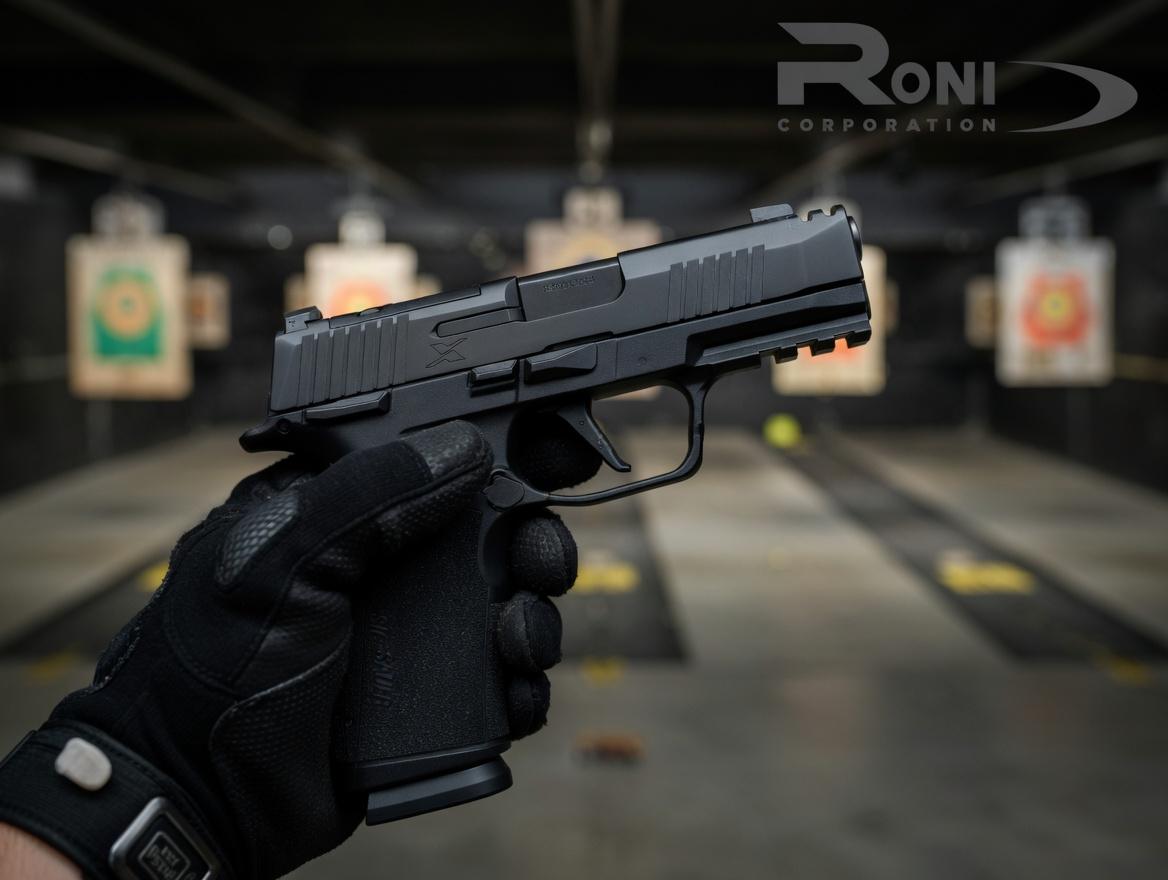
The P365-XMACRO is for buyers who want more capacity and control while staying within the P365 family.
SIG lists the P365-XMACRO COMP with 17+1 capacity, a 1-inch-wide profile, an integrally compensated optic-ready slide, a macro-compact grip module with a standard 1913 rail, interchangeable backstraps, two 17-round steel magazines, and a 3.1-inch barrel.
The XMACRO fits buyers who want:
- 17+1 capacity
- A larger grip
- Better control than smaller P365 versions
- A standard 1913 rail for accessory compatibility
- Interchangeable backstraps
- Optics-ready capability
The tradeoff is concealment. The grip is often the part of a concealed pistol that prints under clothing. A longer grip can be easier to shoot, but harder to hide.
The XMACRO makes sense for someone who is willing to carry a slightly larger pistol in exchange for more control and capacity.
SIG P365-FUSE
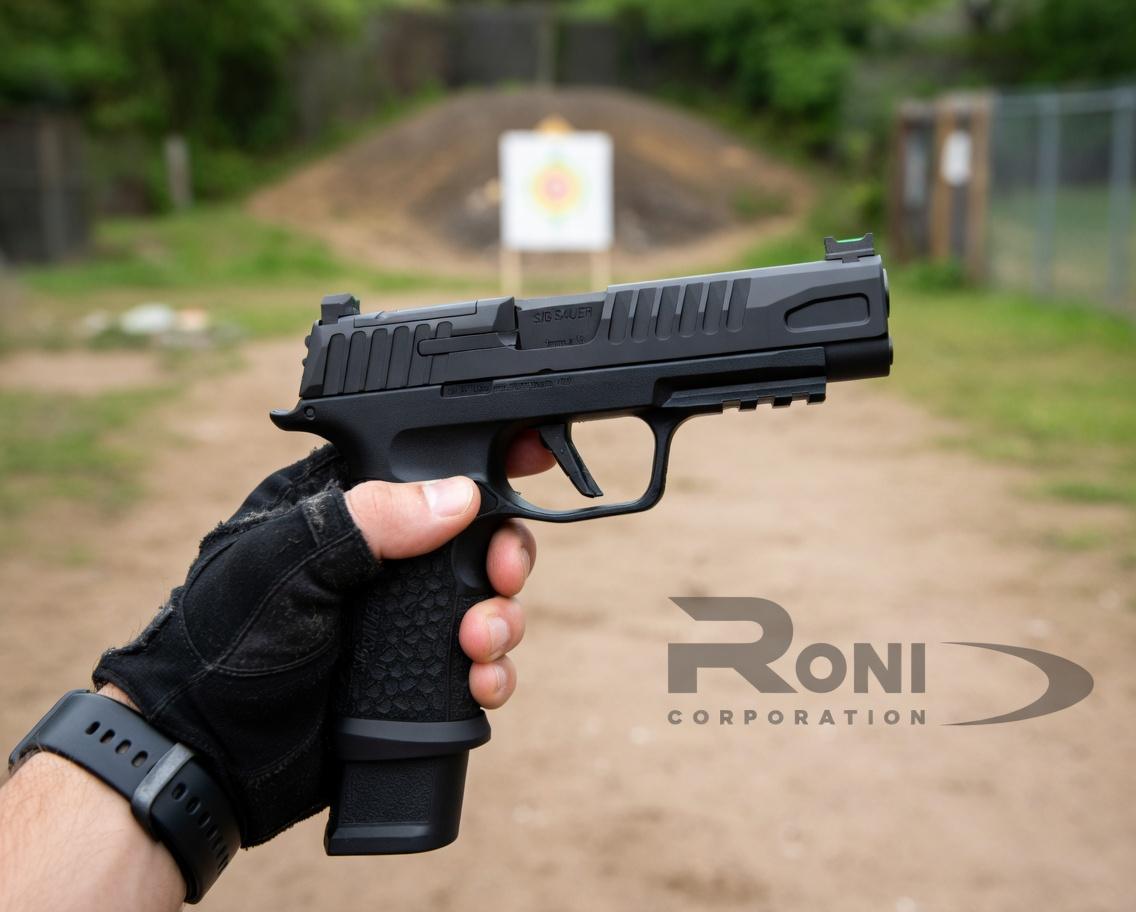
The P365-FUSE pushes the platform closer to crossover territory. SIG lists the FUSE with 21+1 capacity, a 4.3-inch barrel, a 6 7/8-inch optic-ready slide, a 1-inch-wide grip module, fiber-optic front sight, black serrated rear sight, 1913 accessory rail, removable magwell, and interchangeable backstraps. It ships with two 21-round magazines and one 17-round magazine.
The FUSE fits buyers who want:
- Higher capacity
- A longer slide
- A larger carry or range-oriented setup
- Optics-ready capability
- A slim frame with more full-size handling characteristics
The tradeoff is that the FUSE is no longer aimed at the smallest possible concealed carry footprint. It may still be slim, but it is a larger pistol within the P365 family. For many buyers, that makes it more of a crossover option than a deep concealment choice.
SIG P365-AXG Legion
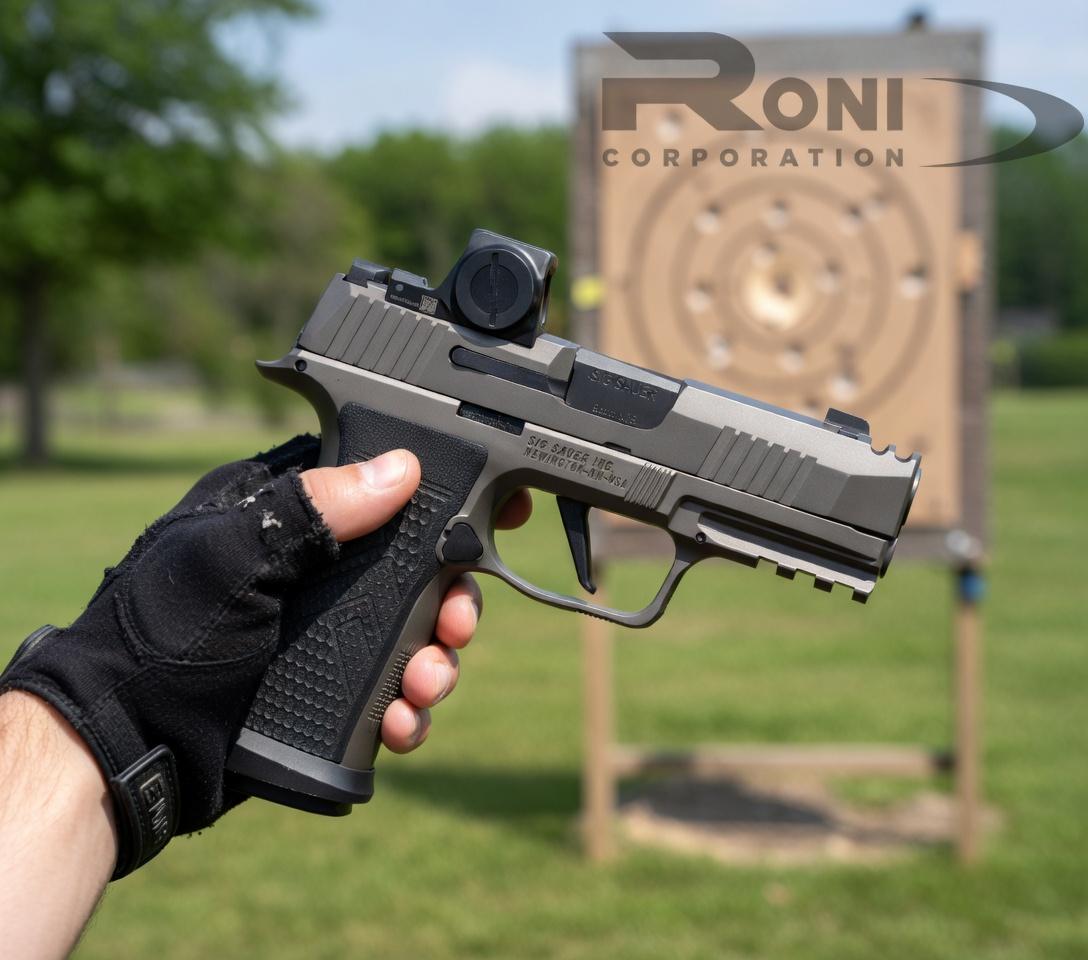
The P365-AXG Legion is the more premium control-focused option in the P365 family.
SIG lists the AXG Legion with an alloy Macro grip frame, G10 grip panels, optic-ready integrated compensated slide design, extended magwell, XRAY3 Day/Night sights, and three 17-round magazines. SIG also notes that this model is not available with a manual safety.
The AXG Legion fits buyers who want:
- A metal grip module
- More weight for a steadier feel
- 17-round magazines
- Integrated compensation
- Premium grip texture and frame feel
- A pistol that leans more toward control than minimum carry size
The tradeoff is cost, weight, and carry footprint. This is not the minimalist version of the P365. It is better viewed as the P365 platform pushed toward a more refined, flatter-shooting carry setup.
SIG P365 Size and Capacity Tradeoffs
Capacity gets attention, but it should not be the only deciding factor.
A 10+1 standard P365, a 12+1 P365XL, a 17+1 XMACRO, and a 21+1 FUSE are not solving the same problem. They are different answers to the same question: how much size are you willing to carry?
Smaller Is Easier to Conceal, But Not Always Easier to Shoot
The standard P365 is easier to conceal because the grip and slide are smaller. That makes it appealing for lighter clothing, smaller body frames, or deeper concealment.
The XL, XMACRO, FUSE, and AXG Legion usually give the hand more contact with the firearm. That can make the pistol feel easier to manage during practice, especially for shooters who struggle with very small pistols.
The practical question is not whether a smaller pistol is better. It is whether the buyer can shoot it well enough and carry it consistently.
Grip Length Often Matters More Than Barrel Length
Many buyers focus on barrel length, but grip length is often more important for concealment.
The grip is the part most likely to print under a shirt. A longer grip can make a pistol easier to control, but it can also make the pistol harder to conceal.
That is why someone choosing between the P365, P365X, P365XL, and XMACRO should not only compare barrel length. They should compare grip length, holster position, body type, clothing, and how the pistol sits when moving, bending, sitting, and driving.
Capacity May Be Limited by Law
Magazine capacity rules vary by jurisdiction. Some states and localities restrict magazine capacity, and those rules can change. Before buying any P365 model or magazine, buyers should check current federal, state, and local law, along with retailer shipping restrictions. Current 2026 resources from USCCA and Giffords both track magazine-capacity restrictions by jurisdiction, though legal summaries should not replace advice from a qualified attorney or official state source.
SIG P365 for Concealed Carry: Which Version Fits Which Buyer?
The P365 family works best when the model is matched to the user’s actual carry style.
For Deep Concealment: Standard P365
The standard P365 is the better fit when concealment matters more than capacity or range comfort.
It makes sense for someone who:
- Dresses lightly
- Needs a shorter grip
- Wants less weight
- Prioritizes daily comfort
- Is willing to practice with a smaller pistol
This version is not the easiest P365 variant for everyone to shoot, but it is one of the easiest to carry.
For Balanced Carry: P365X or P365XL
The P365X and P365XL are better fits for buyers who want a more complete grip.
The P365X makes sense if the buyer wants a shorter slide with a longer grip. The P365XL makes sense if the buyer wants the longer slide, 3.7-inch barrel, and improved sight radius that SIG lists for the XL.
These models are often easier to live with than the smallest P365 if the owner practices regularly.
For More Capacity and Control: XMACRO or AXG Legion
The XMACRO and AXG Legion move the P365 platform toward higher capacity and better control.
The XMACRO gives the buyer 17+1 capacity, interchangeable backstraps, a standard 1913 rail, and a larger grip module. The AXG Legion adds a metal grip frame, G10 grip panels, integrated compensation, and three 17-round magazines.
These versions make sense when the buyer is willing to accept more size in exchange for a steadier feel and greater magazine capacity where legal.
For a Slim Crossover Pistol: P365-FUSE
The FUSE is not the model for someone trying to keep the pistol as small as possible.
It makes more sense for buyers who want a slim pistol with a longer slide, 4.3-inch barrel, 21+1 capacity, and a setup that feels more range-friendly than the smaller P365 models.
For some buyers, that makes the FUSE a carry pistol. For others, it may be more of a home-defense or range companion within the P365 ecosystem, subject to local law and safe storage practices.
Optics, Rails, Holsters, and Accessories
The P365 family has several accessory paths, but buyers should be careful. Not every model accepts the same accessories, and not every holster fits every version.
Optics-Ready Models Change the Buying Decision
Several P365 variants are optics-ready or available with optics-related configurations.
The P365X is listed as optic-ready with a compact footprint. The P365XL is listed with compatibility for ROMEO-X Compact and RMSc optics. The XMACRO and FUSE also include optic-ready slide configurations.
If a buyer knows they want a red dot later, it usually makes sense to consider an optics-ready version from the start. Buying a non-optics-ready pistol and trying to modify it later may add cost and complexity.
Rail Differences Matter
Accessory compatibility is one of the biggest practical differences between models.
The XMACRO uses a macro-compact grip module with a standard 1913 rail. The FUSE also includes a 1913 accessory rail.
That matters for buyers who plan to use a weapon-mounted light, subject to safe handling and local law. A buyer should verify accessory fit for the exact P365 model, not just assume that a product marked “P365” will work across the full family.
Holster Fit Should Be Confirmed Before Carry
Holster fit is not a minor detail. A holster should be made for the exact pistol configuration, including slide length, optic, rail, light, compensator, manual safety, and grip module.
A holster that fits a standard P365 may not fit an XMACRO, FUSE, AXG Legion, or compensated version. A holster made for an optic-free slide may not work with an optic installed.
For a carry firearm, the holster should fully cover the trigger guard, retain the pistol securely, and allow safe access without forcing the trigger area against clothing or foreign objects.
Manual Safety and Safe Handling
Some P365 models are available with a manual safety, while others are not. For example, the standard P365 and P365XL are available with or without a manual safety, while SIG lists the P365-XMACRO COMP, P365-FUSE, and P365-AXG Legion as not available with a manual safety in their standard product listings.
Buyers should verify the exact SKU before ordering because availability can vary by model, configuration, and retailer listing.
Should You Choose a SIG P365 With Manual Safety?
The answer depends on the buyer’s training, comfort level, and carry method.
Some owners prefer a manual safety because it gives them another mechanical control. Others prefer no manual safety because they want a simpler setup and do not want to train around an added control.
Neither option replaces safe handling, a proper holster, or regular practice with the exact carry setup.
Common SIG P365 Questions Buyers Should Ask
Is the SIG P365 Good for Concealed Carry?
Yes, the P365 family is built around concealed carry, but the right model depends on the buyer.
The standard P365 is better for maximum concealment. The P365XL is better for a balance of carry and shootability. The XMACRO and AXG Legion are better for more grip, more control, and higher capacity where legal. The FUSE is better for buyers who want a larger, slim crossover pistol.
Is the SIG P365 Snappy?
The smaller P365 models may feel snappier to some shooters because they are light and compact. That is not unusual for small 9mm pistols.
The larger P365 variants can feel easier to control because they offer more grip surface, longer slides, more weight, integrated compensation on some models, or a combination of those features. SIG specifically markets the XMACRO COMP with an integrated compensator intended to reduce muzzle flip, and the AXG Legion with a two-port integrated expansion chamber for recoil mitigation.
The only honest way to answer this question for a specific person is to handle and test the exact model safely at a range.
What Is the Difference Between the P365 and P365XL?
The standard P365 is smaller and comes with a 3.1-inch barrel and 10-round magazines in the listed standard configuration. The P365XL uses a longer 3.7-inch barrel, extended slide, X grip module, and 12+1 capacity with available 15+1 capacity.
The short version:
Model | Better Fit |
P365 | Smaller carry setup |
P365XL | Better balance of carry and shootability |
What Is the Difference Between the P365XL and XMACRO?
The P365XL is slimmer and more moderate in size. The XMACRO moves toward more capacity and control, with 17+1 capacity, a macro-compact grip module, interchangeable backstraps, a standard 1913 rail, and an optic-ready slide.
The short version:
Model | Better Fit |
P365XL | Slim carry with longer slide |
XMACRO | More capacity, more grip, accessory rail |
Is the SIG P365 Good for New Shooters?
It can be, but the smallest model may not be the easiest version for every new shooter.
A new shooter may like the standard P365 because it is small and light. But that same small size can make the pistol harder to grip and control. A P365XL or XMACRO may feel easier to shoot, though they are larger to conceal.
For a new shooter, the better path is to handle multiple versions, get instruction from a qualified trainer, and prioritize safe handling before buying based only on size or capacity.
Realistic Example: Choosing Between the P365, P365XL, and XMACRO
Consider a buyer who wants one pistol for concealed carry.
They usually wear an untucked shirt, live in a warm climate, have medium-sized hands, and want the option to add a red dot later. They are not trying to buy the smallest possible gun, but they do not want something that feels too large for daily carry.
When the Standard P365 Makes Sense
The standard P365 makes sense if concealment is the main concern.
This buyer might choose the standard P365 if:
- Light clothing makes printing a concern
- A shorter grip matters more than range comfort
- They want the lightest practical P365 setup
- They are willing to practice with a smaller grip
The concern is that the smaller frame may feel harder to control during longer practice sessions.
When the P365XL Makes Sense
The P365XL may be the better fit if the buyer wants a more balanced pistol.
This buyer might choose the XL if:
- They want an optic-ready slide
- They want a longer sight radius
- They want more hand contact
- They still want a slim carry pistol
- They want one pistol for carry and regular range use
For many buyers, the XL is the practical middle ground.
When the XMACRO Makes Sense
The XMACRO makes sense if the buyer wants more capacity and more grip.
This buyer might choose the XMACRO if:
- The larger grip still conceals well enough
- 17+1 capacity is legal in their location
- Interchangeable backstraps matter
- A standard 1913 rail matters
- Better control matters more than smallest size
The concern is that the longer grip may print more under light clothing.
How to Choose the Right SIG P365 Model
A buyer should not start with the model name. They should start with the use case.
Step 1: Decide How It Will Be Carried
Carry method affects model choice.
A smaller pistol may work better for deeper concealment. A larger pistol may work better with a stronger belt, better holster, and clothing that provides more coverage.
Step 2: Decide How Much Grip Can Be Concealed
The grip is one of the biggest deciding factors.
If the standard P365 disappears under clothing but the XMACRO prints, the smaller model may be the better daily carry choice. If the buyer can conceal the XMACRO comfortably, the added grip and capacity may be worth it.
Step 3: Decide Whether an Optic or Light Will Be Used
If the buyer wants an optic, an optics-ready model should be considered early.
If the buyer wants a light, rail configuration becomes important. The XMACRO and FUSE list standard 1913 rails, which may make accessory planning easier than smaller configurations.
Step 4: Check Magazine and Legal Limits
Capacity is only useful if the magazine is legal to own and carry in the buyer’s jurisdiction.
Because magazine laws vary, buyers should check current state and local rules before buying higher-capacity P365 magazines.
Step 5: Budget for the Full Setup
The pistol is only one part of the cost.
A responsible setup may include:
- A quality holster
- A carry belt
- Extra magazines
- Safe storage
- Range time
- Training
- Cleaning supplies
- Optic or light, if appropriate
A cheaper pistol setup that lacks a safe holster or training is not really cheaper in practical terms.
SIG P365 Model Comparison
Model | Main Role | Key Strength | Main Tradeoff |
Standard P365 | Deep concealment | Small size and light weight | Less grip surface |
P365X | Short slide, longer grip | Better grip than standard P365 | Grip may print more |
P365XL | Balanced concealed carry | Longer slide and better handling | Larger than standard P365 |
P365-XMACRO | Higher-capacity carry | 17+1 capacity and larger grip | Harder to conceal than smaller models |
P365-FUSE | Slim crossover pistol | 21+1 capacity and 4.3-inch barrel | Larger carry footprint |
P365-AXG Legion | Control-focused carry | Alloy grip frame and integrated compensation | Higher cost and more weight |
SIG P365 FAQ
Is the SIG P365 Compatible With the Nano Roni From Roni Corporation?
Not yet. The Nano Roni is not currently available for the SIG P365 family at the time of writing, but we are working on it.
The planned compatibility includes the SIG Sauer P365, P365X, P365XL, and P365 X-Macro. Once it becomes available, buyers should still check the final product details before ordering, especially if their pistol has an optic, aftermarket sights, accessories, or other modifications.
Fit can vary by model and setup, so it is best to confirm compatibility before purchase.
What is the SIG P365 best used for?
The SIG P365 family is mainly built around concealed carry and everyday carry. Smaller models prioritize concealment, while larger versions such as the XMACRO, FUSE, and AXG Legion offer more grip, capacity, and control.
Is the SIG P365 good for concealed carry?
Yes, but the best version depends on the buyer. The standard P365 is easier to conceal. The P365XL gives a better balance of concealment and shootability. The XMACRO and AXG Legion give more control and capacity but require more attention to holster and clothing fit.
What is the difference between the SIG P365 and P365XL?
The standard P365 is smaller, with a 3.1-inch barrel and 10-round magazines in the listed standard configuration. The P365XL has a 3.7-inch barrel, extended slide, X grip module, and 12+1 capacity with available 15+1 capacity.
What is the difference between the P365XL and XMACRO?
The P365XL is the slimmer balanced carry option. The XMACRO offers 17+1 capacity, a larger macro-compact grip module, interchangeable backstraps, standard 1913 rail, and an optic-ready slide.
Does the SIG P365 have a manual safety?
Some P365 models are available with a manual safety, while others are not. The standard P365 and P365X are listed as available with or without a manual safety. SIG states that specific models such as the P365-XMACRO COMP and P365-AXG Legion are not available with a manual safety.
Is the SIG P365 optics ready?
Some P365 models are optics-ready, but not every configuration is the same. The P365X, P365XL, XMACRO, FUSE, and AXG Legion all have optics-ready configurations or optic-ready slide details listed by SIG. Buyers should verify optic footprint and mounting compatibility for the exact model before purchase.
Which SIG P365 has the highest capacity?
Among the models covered here, the P365-FUSE is listed by SIG with 21+1 capacity and ships with two 21-round magazines and one 17-round magazine. Magazine legality depends on jurisdiction.
Final Thoughts on the SIG P365
The SIG P365 remains relevant because it is no longer only a small concealed carry pistol. It is a full platform with models that serve different types of buyers.
The standard P365 is for concealment first. The P365X and P365XL are for buyers who want a better balance between size and control. The XMACRO gives the platform more capacity and grip. The FUSE pushes it into crossover territory. The AXG Legion adds a metal-frame, control-focused option for buyers who want a more refined feel.
The right choice depends on what the pistol needs to do every day.
Before choosing a SIG P365 model, decide how it will be carried, how much grip length can be concealed, whether an optic or light will be used, what magazine capacity is legal, and how the pistol feels in the hand. A good carry pistol is not the one with the longest feature list. It is the one the owner can carry safely, handle responsibly, and practice with consistently.