Pistol Conversion Kit Laws Updates: What Changed for Braces, SBRs, and the NFA

Pistol conversion kit laws changed significantly in 2026. Federal making and transfer taxes dropped to $0 for several National Firearms Act (NFA) categories, ATF moved toward formally removing the vacated pistol-brace rule, and October guidance changed enforcement of certain registration and approval requirements.
These developments affect how some firearms are regulated, but they do not eliminate existing firearm classifications or override state restrictions.
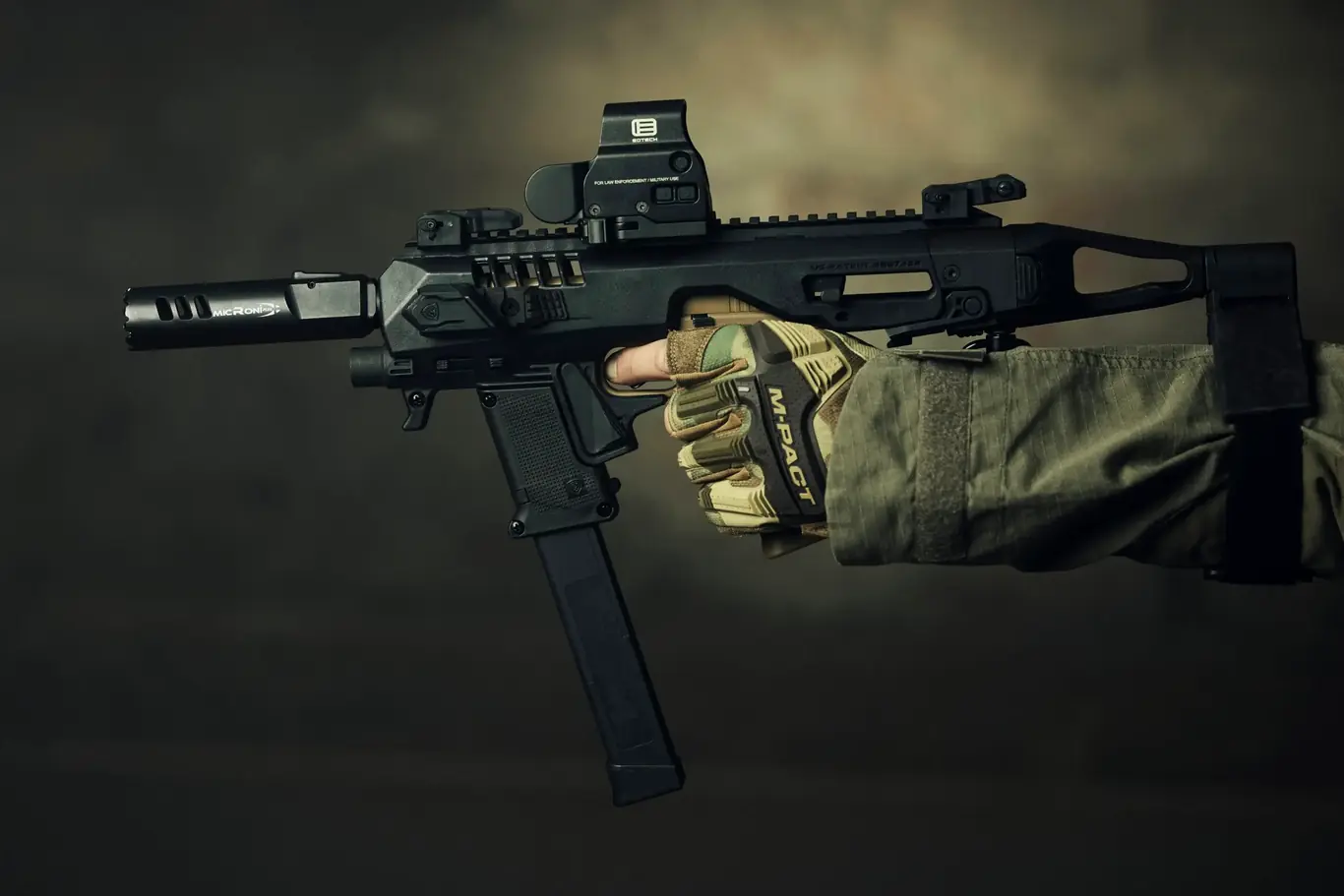
For pistol conversion kits, the central legal question remains how the completed firearm is classified. A conversion chassis, stabilizing brace, shoulder stock, or other attachment may affect that classification depending on the characteristics of the assembled firearm.
Understanding the distinction between firearm classification, statutory tax requirements, and federal enforcement policy is essential to interpreting the 2026 changes accurately.
What Happened to the Pistol Brace Rule?
The 2023 Stabilizing-Brace Rule Was Vacated
On January 31, 2023, the Bureau of Alcohol, Tobacco, Firearms and Explosives (ATF) published a final rule establishing additional criteria for determining whether firearms equipped with stabilizing braces or similar rearward attachments qualified as rifles.
The rule addressed how the design and characteristics of these attachments affected whether a firearm was intended to be fired from the shoulder.
It faced several legal challenges. On June 13, 2024, the U.S. District Court for the Northern District of Texas vacated the rule nationwide in Mock v. Garland. The government's subsequent appeal was dismissed following a joint stipulation in July 2025.
The litigation history is documented in the May 6, 2026 Federal Register notice.
The ruling set aside the 2023 regulation. However, the underlying statutory definitions of rifles and other firearms remained in place.
ATF Proposed Formal Rescission in May 2026
On May 6, 2026, ATF proposed removing the two paragraphs added by the 2023 rule to the definitions of "rifle" in 27 CFR 478.11 and 479.11.
The proposal would remove the additional factoring criteria and return the regulatory language to definitions based on the underlying federal statutes.
The public comment period closed on August 4, 2026. As of November 5, 2026, ATF's stabilizing-brace rulemaking notice still identifies the action as a proposed rule. The court's 2024 vacatur and ATF's proposed regulatory removal are separate developments. The former set aside the rule; the latter addresses removing its language from the regulations.
Braces vs. Stocks: Why the Distinction Matters
A stabilizing brace and a shoulder stock are not interchangeable legal terms.
Under 26 U.S.C. § 5845(c), the federal definition of a rifle considers whether a weapon was designed or redesigned, made or remade, and intended to be fired from the shoulder, together with the other characteristics specified in the statute.
ATF's regulatory history recognizes that some brace-equipped firearms were classified as pistols while others were classified as rifles.
Consequently, vacating the 2023 rule does not establish that every firearm equipped with a stabilizing brace is automatically a pistol.
How This Affects Pistol Conversion Kits
Pistol conversion kits may include rearward supports, chassis components, or other attachments that change the configuration of a handgun.
Relevant classification considerations include:
- Intended firing position: Whether the complete firearm is designed and intended for shoulder firing.
- Rearward attachment: Whether its characteristics affect classification as a rifle.
- Firearm dimensions: Whether the completed firearm falls within a category defined by federal law.
- Applicable classifications: Whether the configuration meets the statutory requirements for an SBR or another regulated firearm.
The fact that a product is marketed as a pistol conversion kit does not independently establish the legal classification of every possible completed configuration.
How Federal Law Defines a Short-Barreled Rifle (SBR)
A short-barreled rifle is a firearm category covered by the National Firearms Act.
Under 26 U.S.C. § 5845(a)(3) and (a)(4), two categories are particularly relevant.
Rifles With Barrels Shorter Than 16 Inches
The NFA covers rifles having barrels shorter than 16 inches.
This classification first requires the firearm to meet the federal definition of a rifle. Barrel length by itself does not automatically make an ordinary pistol an SBR.
Weapons Made From Rifles
The NFA separately covers weapons made from rifles when the modified firearm has:
- A barrel shorter than 16 inches, or
- An overall length shorter than 26 inches.
These provisions address different statutory circumstances.
The 26-inch overall-length threshold should not be treated as a universal classification rule for every handgun or conversion chassis.
Does Every Conversion Kit Create an SBR?
No. Classification depends on the completed firearm.
A chassis that changes the external appearance of a handgun does not automatically establish an SBR classification. The resulting firearm must meet the applicable statutory definition.
The October 2026 NFA enforcement policy, discussed below, does not alter the wording of these definitions.
What Is an Any Other Weapon (AOW)?
An "any other weapon," or AOW, is another firearm category defined by the NFA.
Under 26 U.S.C. § 5845(e), it includes certain concealable weapons and specifically described firearm designs.
The definition also excludes certain firearms, including pistols and revolvers with rifled bores.
An AOW is therefore not a general classification for every firearm that falls outside the ordinary categories of pistols and rifles.
Why Vertical Foregrips Appear in AOW Discussions
ATF has historically interpreted the addition of a vertical foregrip to a handgun as a modification that can bring the firearm within the AOW category.
This interpretation appears in ATF's May 4, 2006 open letter, Adding a Vertical Fore Grip to a Handgun.
The letter also describes registration procedures, approval requirements, and tax payments that predate the 2026 changes.
Those historical procedures should not be presented as current requirements without accounting for the subsequent tax amendments and ATF's October 2026 enforcement policy.
The statutory AOW definition remains relevant, but the current federal treatment of making, registration, and transfer requirements must be read alongside ATF's updated NFA guidance.
Which NFA Taxes Changed in 2026?
The One Big Beautiful Bill Act, enacted July 4, 2025, amended the NFA's making and transfer tax provisions.
Effective January 1, 2026, the federal making and transfer tax rates became $0 for covered firearm categories other than machine guns and destructive devices.
NFA Making and Transfer Tax Rates in 2026
NFA category | Making tax | Transfer tax |
Short-barreled rifle (SBR) | $0 | $0 |
Short-barreled shotgun (SBS) | $0 | $0 |
Suppressor | $0 | $0 |
Any other weapon (AOW) | $0 | $0 |
Machine gun | $200 | $200 |
Destructive device | $200 | $200 |
These rates are established in 26 U.S.C. § 5811, covering transfer taxes, and 26 U.S.C. § 5821, covering making taxes.
The table reflects the statutory rates. It does not establish that every listed firearm can lawfully be made, acquired, or possessed by a private individual.
Did the $0 Tax Eliminate NFA Registration?
The tax reduction did not directly repeal the NFA's registration provisions.
Congress amended the tax amounts, while the underlying registration and approval provisions remained in the statute.
The enforceability of certain NFA requirements became the subject of a separate federal court decision in August 2026, followed by ATF's broader enforcement announcement in October.
What Changed With ATF's October 2026 NFA Guidance?
On August 5, 2026, the U.S. District Court for the Northern District of Texas issued a decision in Silencer Shop Foundation v. ATF.
The court concluded that certain NFA provisions could no longer be sustained under Congress's taxing power as applied to firearm categories whose making and transfer taxes had been reduced to $0.
The court's injunction protected the specified plaintiffs and other parties covered by its judgment rather than everyone nationwide.
On October 9, 2026, ATF announced that the Department of Justice would not appeal the decision and would apply a broader non-enforcement policy. The October 9, 2026 ATF announcement explains the decision to extend that policy beyond those protected by the court injunction.
Which NFA Requirements Are Covered?
ATF's policy applies to SBRs, SBSs, suppressors, and AOWs.
For these categories, the agency announced non-enforcement of specified requirements involving:
- Making firearms: Prior NFA application and approval requirements.
- Transferring firearms: Prior NFA transfer application and approval requirements.
- Registration: Requirements to register covered firearms in the National Firearms Registration and Transfer Record.
- Unregistered firearms: Specified NFA prohibitions involving making, receiving, transferring, and possessing unregistered firearms.
- Marking: The NFA requirement to mark covered firearms.
- Interstate transportation: The prohibition in 26 U.S.C. § 5861(j) concerning interstate movement of unregistered NFA firearms.
The policy also covers specified requirements for businesses to register newly made NFA firearms.
However, it does not extend to every NFA prohibition. ATF expressly excludes provisions involving firearms with obliterated serial numbers and firearms imported in violation of the NFA under 26 U.S.C. § 5861(h) and (k).
Machine guns and destructive devices remain subject to the full applicable NFA requirements.
Non-Enforcement Is Not the Same as Repeal
The October announcement represents an exercise of federal enforcement discretion.
The underlying statutory provisions have not been repealed by Congress.
This distinction matters because the agency's policy can change, and the court's injunction does not automatically provide identical protection to people outside the parties covered by that judgment.
Can Covered NFA Firearms Still Be Registered?
Yes. ATF continues accepting voluntary registrations for the covered firearm categories and maintains the National Firearms Registration and Transfer Record.
Voluntary registration remains relevant because some states condition lawful possession of particular firearms on federal registration or compliance with federal NFA requirements.
However, ATF distinguishes voluntary registration under its current procedures from later attempts to register an already unregistered firearm.
Federal law generally does not permit subsequent registration of unregistered NFA firearms, subject to narrow exceptions.
Could NFA Enforcement Resume?
Yes. ATF's guidance on future enforcement risks identifies circumstances that could change the current policy, including:
- Congress imposing a new tax.
- Modification or reversal of the district court's injunction.
- Changes in relevant legal circumstances.
- Rescission of the Department of Justice's enforcement guidance.
ATF also states that there is no automatic grandfathering protection for unregistered NFA firearms if enforcement resumes.
A future registration opportunity is not guaranteed. Although federal law provides for limited amnesty authority, the Attorney General is not required to establish an amnesty period.
The current policy should therefore not be interpreted as permanent immunity from the underlying NFA provisions.
Which Federal Firearm Requirements Still Apply?
The October NFA policy does not eliminate requirements established under the Gun Control Act (GCA).
ATF confirms that applicable GCA obligations continue for individuals, manufacturers, importers, and federally licensed firearm dealers.
Dealer Transfers and Background Checks
For applicable transfers, federal firearms licensees (FFLs) remain responsible for:
- Completing ATF Form 4473.
- Conducting a NICS background check unless an exemption applies.
- Maintaining required firearm transaction records.
- Complying with restrictions involving prohibited persons.
- Observing applicable interstate transfer and state-law requirements.
ATF also identifies a temporary enforcement exception concerning 18 U.S.C. § 922(b)(4), which normally requires specific authorization for dealer transfers of SBRs and SBSs.
Traditionally, the NFA approval process satisfied that provision. Because the October policy changes NFA approval enforcement, ATF announced that it would temporarily decline to enforce the separate GCA authorization requirement while developing another approval mechanism.
This exception is limited to the identified provision and does not remove other applicable GCA responsibilities.
Firearm Marking and Serial Numbers
The distinction between NFA marking requirements and GCA serialization requirements is particularly important.
Although ATF's October policy includes non-enforcement of the NFA's firearm-marking requirement for covered categories, the GCA imposes separate identification obligations.
Under 18 U.S.C. § 923(i), licensed manufacturers and importers must identify firearms through serial-number markings as prescribed by regulation.
ATF's current guidance confirms that businesses manufacturing firearms and suppressors remain subject to applicable serialization requirements.
The October policy should therefore not be interpreted as eliminating all federal serial-number or firearm-identification obligations.
Licensing and Occupational Taxes
Businesses engaged in manufacturing, importing, or dealing in NFA firearms remain subject to applicable licensing requirements.
The October enforcement policy also does not eliminate the special occupational taxes imposed on businesses conducting covered NFA activities.
These continuing obligations are explained in the industry section of ATF's updated NFA guidance.
State and Local Pistol Conversion Kit Restrictions Still Apply
Federal non-enforcement does not override state or local firearm restrictions.
Some states prohibit certain NFA firearm categories. Others permit possession subject to specific conditions, potentially including federal registration or compliance with federal law.
The legal analysis may involve several separate questions.
Firearm classification: How the state defines the completed firearm and whether its classification differs from the federal definition.
Possession restrictions: Whether state law prohibits the relevant firearm category or permits it subject to conditions.
Registration and federal-compliance requirements: Whether state law requires proof of federal registration or compliance with applicable NFA provisions.
Transportation and transfer requirements: Whether state or local restrictions impose additional conditions.
ATF specifically warns in its October 2026 state-law guidance that it cannot determine whether possession of an unregistered firearm under the current federal non-enforcement policy satisfies an individual state's requirements.
A general federal announcement therefore cannot establish that every conversion-kit configuration is lawful nationwide.
Interstate Transportation Has Separate Requirements
ATF's October policy includes non-enforcement of 26 U.S.C. § 5861(j), which addresses interstate transportation of unregistered NFA firearms.
However, a separate federal transportation requirement remains applicable to SBRs and SBSs.
Under 18 U.S.C. § 922(a)(4), prior federal authorization is generally required for interstate transportation of the firearms covered by that provision.
ATF confirms that individuals must continue filing Form 5320.20, commonly called Form 20, before interstate transportation of SBRs or SBSs, including those that are unregistered under the current NFA enforcement policy.
The distinction is that non-enforcement of one NFA transportation prohibition does not eliminate a separate transportation requirement under the GCA.
Applicable state and local restrictions also remain relevant.
November 2026 Update: What the Latest ATF Guidance Means for Gun Owners
ATF's October 2026 announcement changed how several National Firearms Act (NFA) requirements are enforced. However, firearm owners still face restrictions involving interstate transportation, existing registrations, and state laws.
Updated ATF guidance explains what owners of short-barreled rifles (SBRs), short-barreled shotguns (SBSs), and certain other NFA firearms should know before traveling or changing their registration status.
For pistol conversion kit owners, these requirements become relevant when the completed firearm meets the legal definition of an SBR.
Traveling Across State Lines? SBR Owners Still Need ATF Form 20
One important clarification concerns interstate transportation.
Although ATF is no longer enforcing certain NFA registration requirements, owners of SBRs and SBSs must still obtain federal transportation authorization under 18 U.S.C. § 922(a)(4).
ATF's updated guidance explains how Form 5320.20, commonly called Form 20, must be submitted:
Registered SBRs and SBSs: Owners can submit Form 20 through ATF eForms or by email.
Unregistered SBRs and SBSs: Owners must email the completed form directly to [email protected]. The eForms system is unavailable for firearms not registered to the applicant.
Owners with both: Registered and unregistered firearms must be listed on separate forms.
What this means for pistol conversion kit owners
Installing a handgun into a conversion chassis does not automatically make it an SBR. The classification depends on the characteristics of the completed firearm, including whether it meets the federal definition of a rifle.
If the resulting configuration qualifies as an SBR, the interstate transportation requirements still apply, even when the firearm is unregistered under ATF's current enforcement policy.
Owners should verify the firearm's classification and obtain the required authorization before crossing state lines. State and local transportation restrictions must also be considered.
Removing an SBR From the NFA Registry May Have Permanent Consequences
Some owners of previously registered SBRs may consider removing their firearms from the National Firearms Registration and Transfer Record (NFRTR) following ATF's October announcement.
However, ATF has issued an important warning.
Under its current guidance, once an item is removed from the registry, it cannot be re-registered unless the Attorney General declares an amnesty.
ATF continues accepting voluntary registrations for covered NFA firearms, but this does not mean owners can freely remove and restore existing registrations.
What this means for gun owners
An owner who previously registered an SBR should carefully consider the legal consequences before requesting its removal.
Some states require certain NFA firearms to remain federally registered or otherwise comply with federal requirements. Removing an existing registration could therefore affect whether the firearm may be lawfully possessed under state law.
Future changes to federal enforcement policy are another consideration. ATF has already acknowledged that its current non-enforcement approach could change.
For owners of registered pistol conversion kit configurations, retaining an existing registration may avoid complications that cannot easily be reversed.
A Proposed Rule Could Make Interstate Travel Easier
ATF is also considering changes that could simplify interstate transportation for certain registered NFA firearms.
Under a proposal published May 8, 2026, qualifying owners would generally be allowed to transport covered firearms across state lines for 365 days or fewer without requesting individual ATF transportation approval.
For trips lasting more than 365 days or involving permanent relocation, the proposal would replace the existing individual approval process with advance notification.
What this could mean for SBR owners
If finalized, the rule could reduce paperwork and waiting periods for qualifying interstate trips involving registered SBRs.
Owners who travel to out-of-state shooting ranges, attend competitions, or temporarily relocate with an eligible firearm could benefit from a simpler federal process.
However, the proposal was developed around firearms registered in the NFRTR. Its application to unregistered firearms under ATF's newer enforcement policy remains unresolved.
As of November 20, 2026, the proposed rule has not taken effect. Current Form 20 requirements remain applicable.
Could the NFA Rules Change Again?
The current regulatory situation may not be permanent.
On November 17, 2026, the Congressional Research Service published an analysis of the federal court ruling and ATF's non-enforcement policy.
The report explains that Congress could respond to the legal challenges by modifying the NFA's tax provisions, establishing another constitutional basis for certain requirements, or changing the existing registration framework.
These are possible legislative responses, not enacted changes.
For firearm owners, the practical concern is that today's federal enforcement policy may not remain unchanged. Existing statutory requirements, state restrictions, and the possibility of future federal action should still be considered when evaluating an SBR or pistol conversion kit configuration.
Key Takeaways for Gun Owners and Pistol Conversion Kit Owners
The November guidance provides several practical points for owners evaluating their current firearms or planning future travel.
Check the completed firearm's classification. A pistol conversion chassis does not automatically create an SBR, but configurations that meet the statutory definition remain subject to applicable SBR requirements.
Do not overlook interstate transportation approval. Form 20 remains necessary for qualifying SBRs and SBSs, including unregistered firearms, under current federal rules.
Consider the consequences before removing an existing registration. ATF states that re-registration after removal is unavailable without an amnesty.
Do not rely on the proposed 365-day transportation rule yet. It could simplify travel for eligible registered firearms, but it has not replaced current requirements.
Continue checking state and local laws. Federal non-enforcement does not make every SBR or pistol conversion kit configuration legal in every state.
The latest developments provide more clarity about how owners should handle transportation and registration under ATF's current policy. They do not eliminate the need to evaluate how a firearm is configured, classified, possessed, and transported.
What Determines Whether a Pistol Conversion Kit Is Legal?
The legality of a pistol conversion kit cannot be established solely from its product name or compatibility with a particular handgun.
A jurisdiction-specific assessment should address five questions:
- How is the completed firearm classified? Federal definitions apply to the assembled firearm's characteristics, not merely its accessory description.
- Does an NFA category apply? SBR and AOW classifications involve distinct statutory requirements.
- Which federal provisions remain applicable? The current NFA enforcement policy must be considered alongside continuing GCA restrictions.
- Does state law permit the configuration? State possession, classification, and registration requirements may differ from federal policy.
- Are separate transfer or transportation requirements involved? Certain activities remain subject to federal and state conditions.
Physical compatibility and legal permissibility are different questions. A conversion kit designed to accommodate a handgun does not establish that every completed configuration is lawful.
Frequently Asked Questions
Are pistol conversion kits legal in 2026?
There is no single federal classification covering every pistol conversion kit. Legality depends on the completed firearm's characteristics, applicable federal requirements, and state or local law. The October 2026 enforcement policy does not establish universal legality.
Is the 2023 pistol-brace rule still in effect?
No. The rule was vacated nationwide in June 2024. ATF's separate proposal to remove its regulatory language remains listed as proposed as of November 5, 2026.
Does a stabilizing brace automatically make a firearm an SBR?
No. The firearm must meet the applicable statutory definitions. The presence of a stabilizing brace alone does not automatically establish an SBR classification.
What are the NFA making and transfer taxes in 2026?
The statutory making and transfer taxes are $0 for SBRs, SBSs, suppressors, and AOWs. Machine guns and destructive devices retain the $200 rates. The October ATF policy separately addresses enforcement of specified approval, registration, and tax-stamp requirements.
Is NFA registration mandatory for covered SBRs in 2026?
ATF's October 9 policy states that it will not enforce specified NFA registration requirements for covered SBRs. The underlying statutes remain in place, voluntary registration continues, and state laws may impose additional conditions.
Does ATF's non-enforcement policy apply nationwide?
The agency's policy extends beyond the parties protected by the Silencer Shop Foundation v. ATF injunction. However, the injunction and broader agency policy are legally distinct, and the latter may change.
Can an unregistered SBR be transported across state lines?
ATF states that prior approval under 18 U.S.C. § 922(a)(4) remains required for interstate transportation of SBRs and SBSs, including unregistered firearms. Form 5320.20 is used for this purpose.
Does the October policy eliminate firearm serial-number requirements?
No. Although ATF is not enforcing the NFA marking requirement for covered categories, separate GCA serialization requirements continue to apply, including obligations imposed on licensed manufacturers and importers.
Can Form 5320.20 Be Submitted Online for an Unregistered SBR?
No. ATF's current guidance permits electronic submission through eForms only when the firearm is already registered to the applicant in the NFRTR.
For unregistered SBRs and SBSs, ATF directs owners to submit Form 5320.20 by email to [email protected]. The separate federal transportation authorization requirement continues to apply.
Is ATF Eliminating Form 20 Requirements for Interstate Travel?
ATF proposed changes in May 2026 that would simplify interstate transportation for certain registered NFA firearms, including eliminating individual approval requirements for qualifying trips lasting 365 days or fewer.
However, the proposal has not become a final rule as of November 20, 2026. Current ATF guidance continues to require Form 5320.20 for interstate transportation of SBRs and SBSs.